

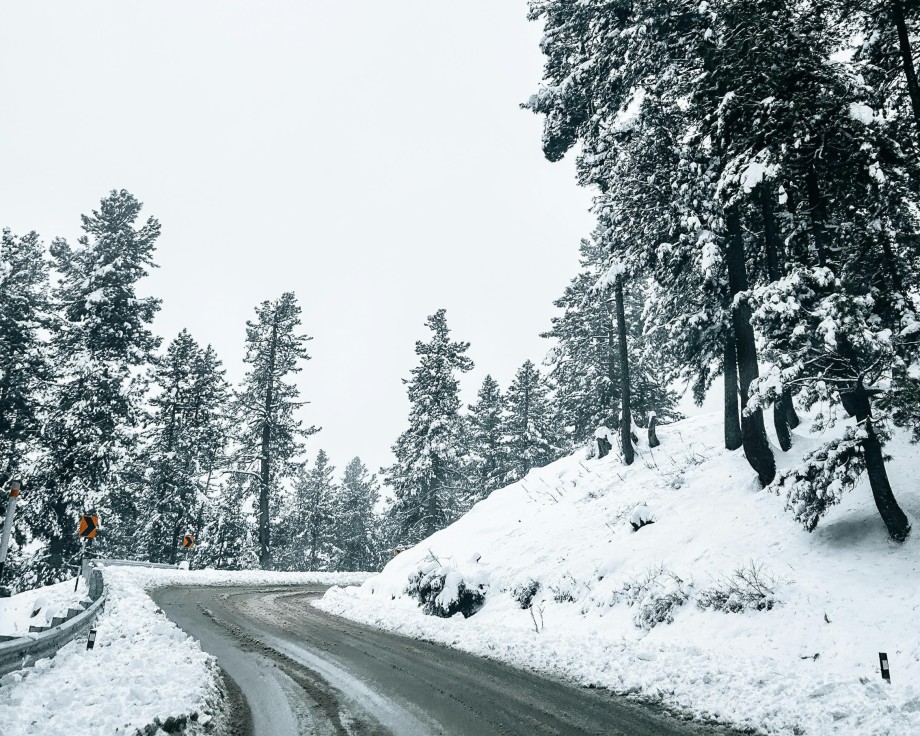
Renting a car in Montenegro between November and April offers an incredible sense of freedom. You can drive from the calm Adriatic coast to snow-covered mountains within a few hours, enjoying landscapes that few travelers see in winter. But with that freedom comes responsibility - Montenegro has strict rules for winter equipment, because mountain roads can be challenging when snow and ice set in.
This guide will help you drive safely, and will introduce you to the quirks of Montenegrin roads in the colder part of the year so you can make the most of your winter journey.
The most important part of winter driving in Montenegro is ensuring your car meets all legal equipment requirements. The police enforce these rules strictly, and being caught without the right gear can lead to on-the-spot fines.
Between November 15 and April 1, all cars driving on roads designated for winter conditions must be fitted with winter tires. This applies even when the road looks clear - as soon as you head inland or climb toward higher ground, the rule is in effect. Each tire must have at least 4 millimeters of tread, and studded tires are not permitted anywhere in the country. We automatically equip our cars with M+S (Mud and Snow) or true winter tires during this period, but for the piece of mind - double check it before you leave the lot.
In addition to proper tires, you must also carry snow chains in your car. This rule applies especially if you’re heading toward Montenegro’s northern regions, such as Kolašin or Žabljak. Chains must be fitted when you see a blue circular sign showing a tire and chain, or whenever the road is clearly covered with snow or ice. Police may stop you before a snowy section and demand you install them, so it is better to install your chains and test them on a snowy or slippery road before you really need them. If it’s your first time, here is how:
Pick an open stretch of road, or an empty car park. Take the chains out, and untangle them so that they are hanging free, in a "web" shape. Place the separated chains by the tires: for a front-wheel-drive vehicle, the chains should go on the front two tires, and for rear-wheel-drive vehicles, on the rear two wheels. Once the first chain is evenly and securely on the three-quarters of the wheel not touching the road, put the other chain on the other tire. When both chains are on, drive forward less than a meter to expose the part of the tire previously touching the ground. Put the brake on again, and finish securing both chains. Tighten the chains, by using a closer link where they close. Drive 20-30 meters, then get out and re-tighten the chains, which will relax as they find their place on the tires. Don't be alarmed by the bumpy ride, this is normal. If this is a practice run on a dry road, don't drive too far or fast.The first time you do this, it feels awkward, but it’s much easier once you’ve tried it in a calm setting rather than on a cold mountain road.
Montenegro also requires every car, year-round, to carry a reflective safety vest, a warning triangle, a first aid kit with a valid expiry date, and a European accident report form. Always check that your rental car has these items before you set off.
Driving in Montenegro’s mountain regions during winter is as rewarding as it is unpredictable. Weather conditions can change quickly, and road quality varies from smooth new highways to narrow, twisting canyon routes. Because of this, you should always check weather forecasts and road updates before you travel - especially if you are renting a car for a road trip in Montenegro and plan to head north.
The road to Kolašin, Montenegro’s main ski center, is generally one of the best-maintained in the country. The route from Podgorica includes a new highway section that stays open year-round, though once you turn off onto smaller roads, snow and ice can appear suddenly. Local drivers often move fast even in poor weather, so keep a generous distance and avoid overtaking on curves or climbs.
Further north, in Žabljak, set within Durmitor National Park, you’ll see some of the most breathtaking winter scenery, but also the most demanding conditions. The main road into town is usually kept open, but heavy snow can temporarily close it. Higher routes, including the scenic Durmitor Ring, are typically closed from November until late spring. Sometimes the navigation apps do not update these changes, so if you get a suggestion to use a shortcut route over the mountains, don’t take it unless you are sure the road is open.
Another road to be cautious on is the Morača Canyon route (M-2), which connects Podgorica to the north. It’s a dramatic, narrow drive carved into cliffs above the river, but it’s also prone to rockfalls, especially after rain or snowmelt. Lighting is not present in all tunnels so expect reduced visibility in them and pass every bend carefully.
Montenegro’s roads are safe when approached with care, but accidents do happen, and when they do, the paperwork matters. If you’re involved in any accident, even a minor one, you must immediately call the police (dial 122) and obtain a Police Report (Zapisnik). Without this, even full insurance car rental Montenegro may become invalid, and you could be held fully responsible for all damages.
Check your rental agreement carefully to understand what’s covered, as what is included in car rental insurance Montenegro can vary. Standard CDW insurance always includes a deductible (known as an “excess”). If you upgrade to Super CDW, confirm which exclusions still apply. It’s common for damage to tires, wheels, undercarriage, or glass to be excluded, and these are exactly the parts most likely to suffer on rough, icy roads. In any case, we are here to guide you on the best option to choose upon renting a car for winter conditions.
If your winter plans include exploring beyond main ski resorts, it’s wise to choose a car with higher ground clearance and a solid engine rather than a small city hatchback. Even though Montenegro’s distances are short, conditions in the mountains can make a big difference to comfort and safety.
A few general driving rules become especially important in winter. In Montenegro, dipped headlights must be on at all times, day and night, regardless of weather. The speed limits are enforced strictly, and when it comes to slippery or winding mountain roads, you should always drive well below the posted maximums. Fines for speeding can range from around €40 to over €1,000, depending on the severity.
Montenegro also has one of Europe’s lowest alcohol limits, set at just 0.03%, so the safest choice is simply not to drink at all before driving.
Before setting off into Montenegro’s winter mountains, take a few minutes to check your car and plan your route. Make sure the winter tires look healthy, the safety kit is complete and the snow chains are where they should be. For road conditions and weather updates, visit the Auto-Moto Association of Montenegro (AMSCG) at amscg.org or call +382 20 234 999 for roadside assistance through AMSCG.
Lastly, don’t be intimidated by the idea of winter driving in Montenegro - it can be one of the most beautiful travel experiences in the Balkans, with its mountain peaks dusted with snow, quiet lakes, and cozy ski towns with wood smoke curling through the air. The best time to rent a car in Montenegro in winter can be any, as long as you prepare properly. So, check your equipment, respect the road conditions, and you’ll find the experience not only safe but deeply rewarding.